
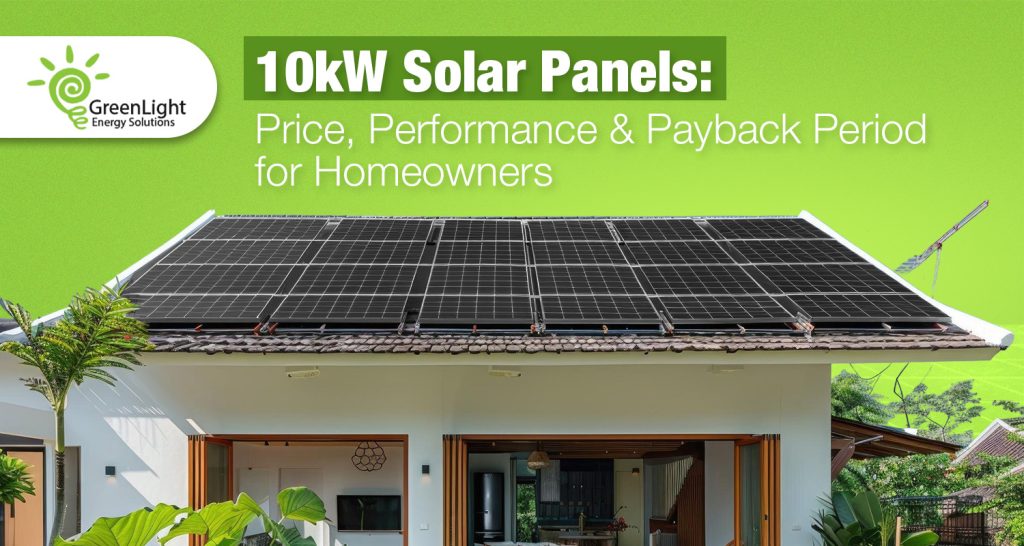
A 10kW solar system is one of the most powerful residential solar setups available for Australian homes. It is designed for properties with higher electricity demand such as larger households, homes with ducted air conditioning, pool pumps, electric vehicles or home businesses.
Compared with smaller solar systems, 10kW solar panels generate significantly more electricity during the day, helping homeowners reduce power bills and rely less on the grid. For many households in NSW, especially those researching solar panel Sydney installations, this system size provides a practical balance between energy production and long-term savings.
However, before installing a system of this size, homeowners usually want to understand three things:
- How much does a 10kW solar system cost?
- How much electricity will it generate?
- How long will it take to pay for itself?
Understanding these factors helps determine whether a 10kW system is the right investment for your home.
What does a 10kW solar system mean?
The “10kW” rating refers to the maximum power output capacity of the solar panels under ideal conditions. It represents the total generating capacity of the panel array rather than the exact amount of electricity your home will receive every hour.
In practical terms, a 10kW system typically includes:
- 24–30 solar panels, depending on the wattage of each panel
- A high-quality solar inverter
- Mounting systems and electrical components
Modern solar panels often range from 400W to 440W, meaning fewer panels may be needed today compared with older systems.
Another important point is inverter sizing. In Australia, it is common to slightly oversize the solar panel array relative to the inverter capacity. This approach helps maximise energy production throughout the day, particularly in the early morning and late afternoon when sunlight levels are lower.
How much roof space do 10kW Solar Panels require?
Roof space is one of the first things installers assess when designing a solar system.
A typical 10kW solar panel system requires around 50 to 65 square metres of roof space, although this depends on the size and efficiency of the panels used.
Several factors influence whether your roof can accommodate a system of this size:
Roof orientation
North-facing panels generally produce the most electricity in Australia. However, east-west installations can still perform well, especially when designed to spread energy production across the morning and afternoon.
Shading
Shade from nearby trees, neighbouring buildings or chimneys can affect performance. Even partial shading can reduce output if the system is not designed correctly.
Roof layout
Homes with multiple roof angles or limited uninterrupted space may require a customised system layout.
For homeowners searching solar panel Sydney solutions, roof design varies widely between suburbs. A professional site inspection helps determine the best placement for maximum performance.
How much do 10kW Solar Panels cost in Australia?
The price of a 10kW solar system varies depending on equipment quality, installation complexity and available rebates.
In Australia, the typical installed price ranges between $9,000 and $14,000 after government incentives.
Several factors influence where your system falls within that range.
Solar panel quality
Premium panels from established manufacturers generally cost more but often offer stronger warranties and better long-term performance.
Inverter type
The inverter is one of the most important components in a solar system. Options include standard string inverters, microinverters and hybrid inverters designed for battery integration.
Roof complexity
Installation on a straightforward roof is faster and cheaper than installations involving multiple roof angles, difficult access or additional electrical work.
Monitoring and smart features
Some systems include advanced monitoring apps, consumption tracking or battery readiness, which can slightly increase upfront cost.
While price matters, homeowners should focus on long-term system value rather than the cheapest quote available.
How much electricity does a 10kW system produce in Sydney?
Solar production varies depending on location, weather conditions and system design.
In Sydney, a well-installed 10kW solar system typically generates around 34–38 kilowatt-hours (kWh) of electricity per day on average across the year.
Daily production changes with the seasons:
- Summer: Higher production due to longer daylight hours
- Winter: Lower production due to shorter days and lower sun angles
Despite seasonal changes, a 10kW system can generate a substantial amount of electricity annually.
This level of generation can cover a large portion of household electricity needs, particularly when energy usage occurs during daylight hours.
Common daytime loads that benefit from solar include:
- Air conditioning
- Pool pumps
- Electric vehicle charging
- Washing machines and dryers
- Dishwashers
- Home office equipment
Using more electricity during the day allows homeowners to consume solar power directly instead of exporting it to the grid, which usually leads to higher overall savings.
Is a 10kW solar system suitable for your home?
Although a 10kW system offers strong generation potential, it is not the right fit for every household.
This system size works best when:
- Daily electricity usage is above 35–40 kWh
- The home has sufficient roof space
- The household uses significant electricity during the day
- Future energy needs may increase (such as EV charging)
Homes with lower electricity consumption may achieve better financial returns with a smaller system.
Choosing the right size system involves balancing energy usage, roof space and budget. A system that is too large may export excessive electricity to the grid at lower feed-in tariff rates.
Payback period for 10kW Solar Panels
One of the biggest reasons Australians install solar is to reduce electricity bills.
For a typical 10kW solar system, the expected payback period is usually between 3 and 6 years, depending on several factors:
Daytime energy usage
Homes that use more electricity during daylight hours generally achieve faster payback because they consume more of their solar energy directly.
Electricity prices
Higher grid electricity prices increase the financial value of the solar energy produced.
Feed-in tariffs
Exported solar energy earns a credit from your electricity retailer, although these rates are usually lower than the cost of buying electricity.
System cost
The upfront price of the system affects the time required to recover the investment.
Over the lifespan of a solar system, which often exceeds 25 years, the total savings can be substantial.
Additional benefits of installing a 10kW solar system
Beyond financial savings, installing 10kW solar panels offers several additional advantages.
Reduced reliance on grid electricity
Generating your own energy means less dependence on rising electricity prices.
Environmental benefits
Solar power reduces greenhouse gas emissions by replacing fossil fuel-generated electricity.
Increased property value
Homes with solar systems are often more attractive to buyers, particularly as energy costs continue to rise.
Future battery integration
Many modern solar systems are designed to support battery storage later, allowing homeowners to store excess solar energy for evening use.
Final thoughts
A 10kW solar system can be a smart option for households with higher energy consumption and sufficient roof space to accommodate the panels.
In Sydney, these systems typically generate around 34–38 kWh per day, helping to noticeably lower electricity costs while offering a payback period that can often be achieved within a few years.
That said, choosing the right solar setup isn’t just about going for the biggest system. The ideal design should align with your energy usage patterns, roof orientation, and long-term plans.
For those considering solar panel Sydney solutions, partnering with an experienced provider like GreenlightSolar ensures your system is properly designed, safely installed, and built to deliver consistent performance for years to come.
FAQ:
How much do 10kW solar panels cost in Sydney?
The cost of 10kW solar panels in Sydney typically ranges between $9,000 and $14,000 after government rebates. The final price depends on panel quality, inverter type, roof complexity and installation requirements.
Higher-quality components may increase upfront cost but often provide better performance and longer warranties.
How many panels are in a 10kW solar system?
A typical 10kW solar system includes between 24 and 30 solar panels, depending on the wattage of each panel.
Modern high-efficiency panels produce around 400W to 440W, meaning fewer panels are needed compared with older systems.
How much electricity does a 10kW solar system generate?
In Sydney, a well-designed 10kW solar system can produce around 34–38 kWh of electricity per day on average across the year.
Actual production depends on factors such as:
- Roof orientation
- Shading
- Weather conditions
- System design and installation quality
Is a 10kW solar system too big for a house?
A 10kW solar system is suitable for homes with higher electricity usage, typically above 35–40 kWh per day.
It is often ideal for:
- Large households
- Homes with swimming pools
- Electric vehicle charging
- Ducted air conditioning
- Home offices or small businesses
For homes with lower energy use, a smaller solar system may provide better value.
How long does it take for 10kW solar panels to pay for themselves?
The average payback period for a 10kW solar system is between 3 and 6 years.
Payback depends on:
- Electricity prices
- Feed-in tariffs
- Daytime energy usage
- Total system cost
Households that use more solar power during the day usually recover their investment faster.


