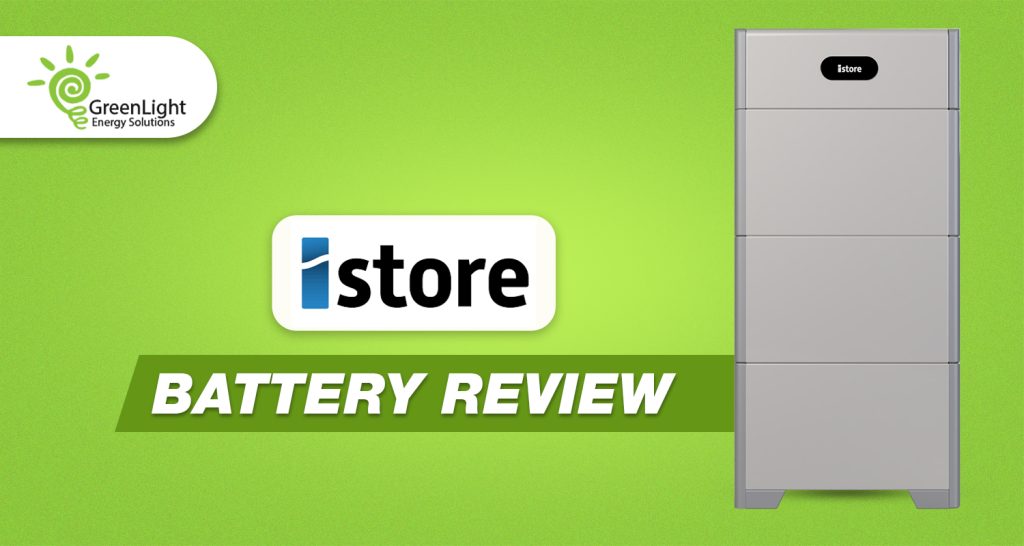
The shift toward home solar storage has accelerated across Australia, and the iStore battery range has quickly become a common consideration for households wanting affordable, flexible, and reliable backup energy. With more homes seeking energy independence and better use of solar power, the iStore system offers a middle-ground between premium units and low-cost entry products—while providing solid performance and user-friendly features. This review looks closely at how the iStore battery performs in real Australian conditions, how it compares with other options, and what homeowners should know before installation.
Why the iStore Battery Is Getting Attention
iStore entered the market with its popular heat pump hot water systems, then followed with a home battery that positions itself as a cost-effective solution for solar households. The system includes a hybrid inverter and lithium iron phosphate (LFP) battery modules, allowing homes to store daytime solar and use it during evening peak periods or power outages.
Australian installers often highlight these benefits:
- Straightforward installation process
- User-friendly monitoring app
- LFP chemistry for safety and longevity
- Competitive price point
- Flexible capacity options
For many households, the iStore battery provides a balance of affordability and capability, especially for those wanting hybrid storage without paying premium-tier prices.
Who makes iStore batteries?
iStore batteries are supplied by iStore Energy, an Australian clean energy brand best known for its heat pump hot water systems. While iStore is an Australian company, its battery units are manufactured through specialist overseas partners that build LFP-based storage systems for global brands. iStore oversees system design, local compliance, and Australian warranty support, ensuring the battery meets national standards and integrates smoothly with local solar setups.
iStore Battery Design and Technology
The iStore battery uses lithium iron phosphate (LFP) technology, which is widely regarded as the safest and most thermally stable battery chemistry for residential systems. LFP batteries have lower fire risk and more predictable ageing than NMC batteries, making them suitable for Australian climates.
Notable design characteristics:
- Modular setup for expanding capacity
- Outdoor-rated construction
- Integrated hybrid inverter for a tidy installation
- Stable discharge behaviour for household loads
- Compatibility with common solar configurations
The system’s simplicity is one of its strongest features. Unlike some premium solutions, the iStore battery does not require complex firmware adjustments or proprietary installations, which helps reduce labour costs and downtime.
Performance and Efficiency in Daily Use
Real-world Australian use shows the iStore battery can comfortably handle daily cycles, including evening demand peaks, washing machines, dishwashers, and general household appliances. The hybrid inverter intelligently prioritises solar usage, shifting any surplus to charge the battery before exporting to the grid.
Performance highlights:
- High depth of discharge, improving usable capacity
- Smooth switching during power outages, depending on configuration
- Responsive monitoring app showing live solar, battery, and consumption data
- Stable efficiency, performing best with moderate daily cycles
Compared with top-tier batteries, the iStore system is not aimed at heavy off-grid setups or large, energy-intense properties, but it reliably supports standard suburban households.
Battery Sizes and Capacity Options
The iStore range includes a practical spread of storage sizes to suit different home types. Most systems fall between 5 kWh and 15 kWh, with modular add-ons available. This flexibility allows installers to tailor the design to the home’s energy profile, roof size, and daily usage patterns.
General guidance:
- 5–10 kWh suits small to mid-sized homes
- 10–15 kWh suits larger households
- Expandable units allow future energy growth or EV charging needs
This scalable design is one of the factors that makes the iStore battery popular among homeowners planning to gradually expand their solar system.
iStore Battery Installations in Australia
iStore battery installations tend to be efficient because the system integrates the inverter and battery in a single package. This reduces cabling, external components, and setup time. A typical installation takes half a day to a full day, depending on wall mounts, switchboard layout, and any backup circuit work.
Best installation practices include:
- Using a Clean Energy Council–accredited installer
- Maintaining ventilation and shading
- Avoiding installation in harsh direct sunlight
- Ensuring compliance with local safety regulations
GreenLight Solar specialises in iStore battery installations, helping homeowners select the right system size and ensuring the installation meets electrical standards and warranty requirements.
What is the most reliable solar battery in Australia?
Several batteries are regarded as highly reliable in Australia, including Tesla Powerwall, BYD, Sungrow, and LG’s premium LFP units. The most reliable option depends on the home’s needs, but batteries with LFP chemistry, long cycle life, strong warranties, and proven thermal stability typically perform best in Australian conditions. Systems such as BYD and Tesla consistently rank highly for durability, capacity retention, and long-term performance across diverse climates.
How iStore Compares with Other Batteries
When compared with major competitors, the iStore battery sits in the mid-range segment. It does not offer the extreme cycle life of top-end brands, but it delivers solid performance at a more accessible price.
iStore vs Tesla Powerwall
Powerwall is a premium all-in-one unit with advanced software, but it costs significantly more. iStore provides good value for families wanting essential storage without the premium price tag.
iStore vs BYD
BYD batteries deliver higher efficiency and longer cycle life, making them ideal for daily heavy cycling. iStore, however, offers strong affordability and simpler integration.
iStore vs Sungrow Battery
Sungrow’s battery offers robust performance and strong inverter compatibility. iStore remains a good alternative for homeowners wanting an integrated system from one brand.
Is the iStore Battery Worth It?
For households wanting reliable energy storage without entering the premium category, the iStore battery is a compelling choice. It offers dependable daily cycling, safe LFP chemistry, flexible sizing, and a competitive price. The system is well suited to families looking to reduce their evening grid consumption or gain essential backup during outages.
Conclusion
The iStore battery has established itself as a practical and cost-effective storage solution for Australian homes. Its LFP chemistry, modular sizes, and integrated hybrid design make it a versatile option for families seeking reliable daily performance without high upfront costs. When installed by accredited professionals, an iStore system supports better solar utilisation and provides meaningful protection against rising electricity prices. For tailored advice and expert installation, GreenLight Solar helps homeowners choose the right iStore setup for long-term value and energy independence.
FAQs
1. How long does an iStore battery last?
An iStore battery generally lasts 10 years or more, depending on cycle frequency, temperature, and installation conditions. Using lithium iron phosphate (LFP) chemistry helps support longer life and stable performance. Most homes achieve strong battery health well past the warranty period when the system is installed correctly and operated within normal household cycling patterns.
2. Can the iStore battery provide backup power?
Yes. The iStore battery can provide backup power when paired with a compatible hybrid inverter and a correctly wired backup circuit. During an outage, the system can support essential loads such as lighting, refrigeration, internet, and small appliances. Homes seeking whole-of-home backup may need a larger installation or additional battery modules.
3. Is the iStore battery suitable for off-grid homes?
The iStore battery is primarily designed for on-grid hybrid systems rather than full off-grid living. While it can support partial off-grid or extended backup operation, heavier demand typically requires larger-capacity batteries such as BYD or high-end LFP off-grid models. For standard suburban households, the iStore battery delivers reliable daily cycling and strong solar utilisation.
4. How much storage capacity do I need with an iStore battery?
The ideal capacity depends on your household’s usage. Smaller homes often choose 5–10 kWh, while larger families may prefer 10–15 kWh or modular expansion. A solar installer can assess your daytime production, evening consumption, and whether you want blackout protection to help size the system correctly.
5. How long does an iStore battery installation take?
Most iStore battery installations take half a day to a full day, depending on the switchboard layout, wall or ground mounting requirements, and any backup circuit work. The integrated hybrid design typically speeds up installation compared with systems that use separate inverters and battery enclosures.
6. Is the iStore battery a good choice for reducing power bills?
Yes. By storing excess solar energy generated during the day and using it during evening peak times, the iStore battery helps reduce grid dependence. Homes with high evening usage—such as families who cook, clean, or heat water after sunset—often see the greatest benefit.
7. Does the iStore battery work with all solar systems?
The iStore system is designed to work with most modern solar installations, provided it is paired with a compatible hybrid inverter. Homes with older systems may need an inverter upgrade to ensure proper integration and warranty compliance.
8. Is the iStore battery safe?
Yes. The iStore battery uses LFP (lithium iron phosphate) chemistry, known for strong thermal stability and low fire risk. This makes it well suited to Australian climates, especially in regions with high summer temperatures.
9. Can I add more battery capacity later?
Yes. iStore offers modular battery options that can be expanded in the future. This flexibility allows homeowners to start with a smaller system and increase capacity as energy needs grow, such as after adding an electric vehicle or expanding the household.
10. Who installs iStore batteries?
iStore batteries should be installed by a Clean Energy Council–accredited installer to ensure compliance with Australian standards. Green Light Solar provides expert design and installation services to help homeowners select the right capacity and configuration for their property.