Power bills across Sydney keep climbing, feed-in tariffs keep shrinking, and more NSW households are adding a battery to hold onto the solar they generate during the day. Fox ESS has gone from a name almost nobody recognised to one of the most-quoted battery brands in the country, mostly on the strength of sharp pricing and a modular design you can grow over time.
This review covers what Fox ESS actually is, which models sell here, what you should expect to pay in 2026, how the batteries hold up in Australian conditions, and who the system genuinely suits. No hype, just what matters before you spend five figures on home battery storage.
The short verdict
A Fox ESS battery is a strong pick if you want affordable, expandable storage that pairs with a compatible hybrid inverter and covers your evening usage. You buy Fox for value and stackability, not for premium all-in-one polish. The chemistry is safe, the efficiency is high, and the price per usable kilowatt-hour is among the lowest on the market. The main thing to weigh is that Fox is a younger brand than Tesla or BYD, so installer quality and local support carry extra weight.
Who makes Fox ESS?
Before trusting any battery with a 10-year job, it helps to know who stands behind it.
Fox ESS was founded in 2019 and shipped its first products in April 2020. Its batteries have been Clean Energy Council (CEC) approved for use in Australia since 2022, and the company now runs a local support office in Melbourne, so warranty and technical queries are handled onshore rather than offshore.
A few signals worth knowing:
- Fox ESS is a subsidiary of Tsingshan Group, one of the world’s largest metals producers. That parentage gives Fox a genuine cost advantage at the manufacturing level, which is part of why it can price below Western and Japanese rivals without obviously cutting corners on hardware.
- It was added to the BloombergNEF Tier 1 energy storage manufacturer list in Q4 2024. Tier 1 status reflects manufacturing scale and financial stability, not brand marketing.
- It was named to the Forbes Global Unicorn list in 2023.
None of this guarantees a flawless decade of service. It does mean the company is well funded and unlikely to vanish before your warranty runs out, which is the real question with any newer entrant.
Fox ESS battery models available in Australia
Fox ESS sells modular, high-voltage lithium iron phosphate (LiFePO4) systems. You start with a base setup and add modules as your needs grow, which suits homes that are adding an EV, a heat pump or a home office over time. Here is how the current Fox ESS battery range breaks down.
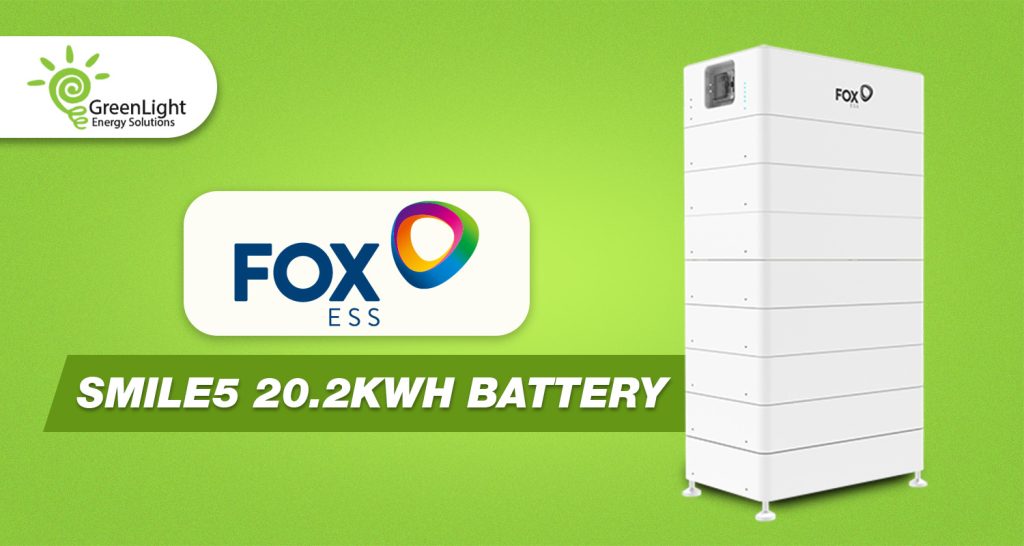
Fox ESS EQ4800 is the most popular model in Australia. It is a high-voltage modular battery built around a control module plus a stack of battery modules, each holding 4.66 kWh of usable capacity. A single-phase system scales to around 41.93 kWh with seven modules, so it covers everything from a modest terrace to a large family home.
Fox ESS CQ6 is the newest 2026 release and the flagship. It uses larger modules of roughly 5.99 kWh usable, carries a 12-year warranty rather than the standard 10, and adds extra safety hardware including built-in fire suppression per Fox documentation. It is newer to market, so its long-term local track record is still building.
Fox ESS EP series covers the larger all-in-one style units for homes wanting more capacity in fewer boxes. Expansion here uses a parallel connection, which can take more space than the stackable EQ and CQ designs.
Fox ESS specification snapshot
| Specification | Fox ESS EQ4800 | Fox ESS CQ6 |
|---|---|---|
| Chemistry | LiFePO4 (LFP) | LiFePO4 (LFP) |
| Usable capacity per module | 4.66 kWh | approx. 5.99 kWh |
| Design | High-voltage, modular stack | High-voltage, modular stack |
| Scalability | Up to approx. 41.93 kWh (single-phase) | Multi-module stack |
| Round-trip efficiency | Above 95% | Above 95% |
| Depth of discharge | Up to approx. 100% | Up to approx. 100% |
| Cycle life | 6,000+ cycles | 6,000+ cycles |
| Ingress protection | IP65 | IP65 |
| Operating temperature | Around -10°C to 50°C | Around -10°C to 50°C |
| Warranty | 10 years | 12 years |
Confirm exact figures against the current Fox ESS datasheet at the time of quoting, since model specs are refreshed periodically.
Performance in Sydney conditions
Sydney throws a real spread at a battery: hot, humid summer days, mild winters, and long daylight hours that mean frequent charge and discharge cycles. A home battery has to handle that daily rhythm without losing much to heat or degrading early.
Fox ESS handles this well for a few practical reasons. LFP chemistry is thermally stable and copes with heat better than older lithium types, the IP65 rating suits sheltered outdoor mounting, and the rated operating range covers NSW extremes at both ends. Round-trip efficiency above 95% means most of the solar you store at midday is still there when you switch the kettle on at 7pm.
For a typical setup, you export surplus solar during the day, then draw the battery down through the evening peak. Sized correctly, a Fox system carries most Sydney homes through to the next morning’s sun.
Fox ESS battery price in Australia (2026)
Fox ESS sits in the value bracket, which is a big part of its appeal. Based on installer network data, installed EQ and EP series systems have averaged around $800 to $900 per usable kilowatt-hour, making Fox one of the lowest-cost options on the market. The newer CQ6 is still settling into pricing as install volumes build.
As a rough guide before any rebate:
- A mid-size battery around 10 kWh usable typically lands in the ballpark of $8,000 to $9,000 installed.
- Larger stacks scale from there, and adding a compatible hybrid inverter (if you don’t already have one) is a separate line item.
Your final figure depends on the number of modules, whether a hybrid inverter is needed, any switchboard or metering work, and site access for mounting. The only accurate number is a quote against your own roof, usage and switchboard.
Rebates can change the maths in 2026
The federal battery incentive was restructured in 2026, moving from a flat subsidy to a tiered model, so the amount you receive now depends on battery size and install timing rather than a single fixed rate. NSW buyers may also be able to stack additional support and interest-free loan options on top, depending on eligibility.
Because the rates and eligibility rules shifted this year, treat any figure you read online as indicative and confirm the current amount for your system size before you sign. A well-sized Fox system paired with the right rebate can shorten the payback period meaningfully.
Installation and compatibility
Fox ESS batteries are mostly DC-coupled, which means they generally need a compatible hybrid inverter. If you are installing solar and storage together, that is straightforward. If you are retrofitting a battery to an existing solar system, your current inverter may not be suitable, and swapping it adds cost. This is the single most important thing to check before you commit.
A proper install also depends on switchboard capacity, mounting location (wall or floor, indoor or sheltered outdoor), and your local network rules. A qualified installer assesses all of this before recommending a size, which is what keeps a battery from underperforming its projected savings.
Pros and cons
Strengths
- Low cost per usable kilowatt-hour, among the most affordable quality options here
- Safe, stable LiFePO4 chemistry rated for 6,000+ cycles
- Modular design lets you start smaller and expand later
- High round-trip efficiency above 95%
- Local Melbourne support office and CEC approval since 2022
Trade-offs
- Younger brand than Tesla, BYD or Sungrow, so the long-term local track record is still shorter
- Mostly DC-coupled, so retrofits can need an inverter change
- The app is functional rather than best-in-class
- Stock and model availability vary by installer
How Fox ESS compares to other batteries
Against premium names like the Tesla Powerwall 3 and the BYD Battery-Box, Fox ESS competes almost entirely on price and expandability rather than brand prestige or software features. Brands such as Sungrow and GoodWe offer slightly more polished ecosystems and stronger local recognition, usually at a higher price.
Against budget batteries, Fox generally wins on build quality, efficiency and warranty terms. For a lot of buyers that middle position is exactly right: dependable daily storage and modular growth without paying top-tier money.
Is a Fox ESS battery worth it?
For a Sydney home with moderate to high evening usage, existing or planned solar, and an eye on future needs like an EV, a Fox ESS battery is well worth shortlisting. You get reliable everyday storage, safe chemistry, and room to expand, at a price that stacks up over a decade of use. The value case is strongest when the system is sized to your actual night-time consumption and installed by a team that checks inverter compatibility and switchboard capacity first.
If you would like a system sized around your real usage data and a fixed quote with current 2026 rebates applied, the team at Greenlight Solar can assess your home and recommend the right Fox ESS configuration.
Frequently asked questions
How much does a Fox ESS battery cost in Australia?
Installed EQ and EP series systems have averaged roughly $800 to $900 per usable kilowatt-hour, which puts a 10 kWh system in the ballpark of $8,000 to $9,000 before rebates. Your exact price depends on system size, whether a hybrid inverter is needed, and installation specifics.
Which Fox ESS battery is best for a home?
The EQ4800 is the most popular residential choice thanks to its modular 4.66 kWh stacking. The newer CQ6 is the flagship, with larger modules and a 12-year warranty. The right size depends on your evening energy use, not your total daily consumption.
Are Fox ESS batteries safe?
Yes. They use lithium iron phosphate (LiFePO4) chemistry, which is thermally stable and lowers fire risk compared with older lithium types. The CQ6 adds built-in fire suppression hardware.
How long does a Fox ESS battery last?
Fox ESS batteries are rated for 6,000+ cycles and carry a 10-year warranty (12 years on the CQ6), which supports well over a decade of daily charging and discharging under normal household use.
Can I add a Fox ESS battery to my existing solar system?
Often yes, but Fox batteries are mostly DC-coupled and need a compatible hybrid inverter. If your current inverter is not suitable, a retrofit may mean replacing it, so have an installer check compatibility first.
Does a Fox ESS battery work during a blackout?
It can provide backup power during an outage when installed with the right inverter and backup configuration. Blackout protection is not automatic on every setup, so confirm it during design.
Is Fox ESS better than Tesla or BYD?
Fox ESS is not a premium brand. It competes on lower price and modular expansion rather than software or prestige. For value-focused buyers who want reliable storage without top-tier pricing, it is a strong option.