
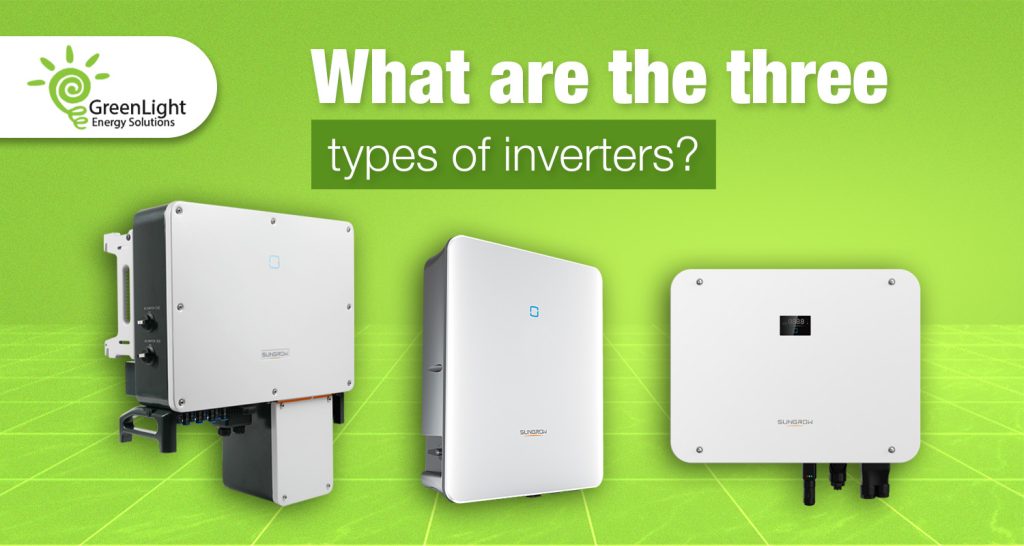
If you’re planning a solar system, the three main types of solar inverters are string inverters, microinverters and hybrid inverters. Each one does the same core job: turning the direct current (DC) produced by solar panels into alternating current (AC) that your home can use. Where they differ is in how they manage panel performance, shading, battery storage and long-term flexibility.
Why the inverter matters more than many homeowners realise
Panels often get all the attention, but the inverter is what makes solar power usable inside your home. It also affects how efficiently your system performs day to day, how well it handles shade, and whether adding a battery later is simple or expensive. Government guidance notes that a solar inverter converts DC electricity into AC electricity, while most systems use either a single string inverter or multiple microinverters depending on the setup.
For homeowners comparing solar inverters in Sydney, this matters because roof layouts vary a lot. A straightforward roof with full sun has different needs from a home with dormers, trees or multiple roof faces. The right choice can improve performance, reduce headaches and make future upgrades easier.
1. String inverters
A string inverter is the most common and usually the most affordable option. In this setup, several panels are linked together in a “string”, and one central inverter handles the conversion from DC to AC. Energy.gov.au notes that most household solar systems use a single string inverter, and that string units are often the cheapest option available.
When a string inverter works well
String inverters suit homes with:
- a simple roof shape
- little to no shading
- panels facing the same direction
- a tighter upfront budget
Because there is only one main inverter, installation is usually simpler and servicing is more straightforward. That is one reason this style remains so popular across Australian homes.
The trade-off
The catch is that panels in the same string work together. If one panel is shaded, dirty or underperforming, it can pull down the output of the whole string. That makes this option less ideal for roofs with patchy shade or mixed orientations.
For many homes, though, a quality string inverter still offers strong value. If you want a dependable, cost-conscious option, this is often the first place to look.
2. Microinverters
Microinverters are small inverters installed at each panel rather than one central box for the whole system. According to Energy.gov.au, some systems use multiple microinverters, with one fitted to each panel on the roof.
Why homeowners choose microinverters
Microinverters are a strong fit when:
- your roof has partial shading
- panels face different directions
- you want panel-level monitoring
- you value performance over the lowest upfront cost
Because each panel works independently, shade on one panel does not drag down the entire system in the same way it can with a string inverter. That makes microinverters especially useful on more complex roofs.
The trade-off
The main downside is cost. Microinverters generally cost more upfront, and because the electronics sit on the roof, replacement can be more involved if a unit fails. Still, for homes with tricky roof conditions, the extra generation can justify the spend over time.
If your main goal is getting the most from every panel, microinverters are worth serious consideration.
3. Hybrid inverters
Hybrid inverters are designed for homes that want solar now and battery flexibility either now or later. They manage solar generation and battery storage in one system, which is why they are becoming more common in homes focused on energy independence.
Why hybrid inverters are gaining attention
A hybrid inverter makes sense when:
- you want to install a battery now
- you plan to add a battery later
- you want better control over evening energy use
- backup power matters to you
Instead of treating battery storage as a separate future project, a hybrid inverter keeps that pathway open from the start. That can reduce upgrade complexity later and make your solar setup more future-ready.
The trade-off
Hybrid inverters usually cost more than a standard string inverter. For a home with no battery plans and a simple roof, that extra spend may not be necessary. But for families looking at time-of-use tariffs, blackout protection or EV charging, hybrid systems can be the smarter long-term move.
Which inverter is best for a Sydney home?
There is no single best answer for every property. The best inverter depends on your roof, your budget and what you want your system to do over the next five to ten years.
A practical way to think about it is this:
- Choose a string inverter if your roof is simple, unshaded and you want the most economical setup.
- Choose microinverters if your roof has shade, multiple angles or you want stronger panel-by-panel performance.
- Choose a hybrid inverter if battery storage is part of your plan now or in the near future.
That is also consistent with Greenlight Solar’s own service focus, which highlights shading, roof configuration, system size and battery integration as key decision points when choosing an inverter in Sydney.
Other factors worth checking before you buy
No matter which type you choose, a few basics still matter:
Efficiency
Higher conversion efficiency means less energy lost when turning solar power into usable electricity. Greenlight Solar’s inverter page emphasises how inverter efficiency affects the usable output of the whole system.
Warranty and lifespan
Greenlight Solar states that most solar inverters come with warranties of roughly 5 to 12 years, while typical lifespan is around 10 to 15 years, depending on conditions and maintenance. That means it is worth checking not just price, but service support and warranty backing.
Monitoring
Good monitoring makes it easier to spot faults early and understand how your system is performing across seasons.
Installation quality
Even the best inverter can disappoint if it is installed poorly. Placement, ventilation and proper wiring all affect safety and long-term reliability.
Final word
So, what are the three types of inverters? For most residential solar systems, the answer is string inverters, microinverters and hybrid inverters. String inverters are the budget-friendly standard, microinverters suit complex or shaded roofs, and hybrid inverters are the go-to choice for battery-ready homes.
For anyone searching for solar inverters or an inverter Sydney solution, the smartest move is to match the inverter to the property rather than chasing whatever sounds most advanced. The right inverter is the one that fits your roof conditions, energy habits and future plans.
FAQ:
What is the main purpose of a solar inverter?
A solar inverter converts direct current (DC) electricity generated by solar panels into alternating current (AC) electricity. AC power is the form used by household appliances, making the inverter a critical component of any solar power system.
Without an inverter, the electricity produced by your panels cannot be used inside your home or exported to the grid.
What are the three types of solar inverters?
The three primary types of solar inverters used in residential systems are:
- String inverters – One central inverter connected to multiple solar panels.
- Microinverters – Small inverters installed on each individual panel.
- Hybrid inverters – Inverters designed to work with both solar panels and battery storage.
Each type has different advantages depending on roof design, shading and future battery plans.
Which solar inverter is best for homes in Sydney?
The best inverter Sydney homeowners should choose depends on several factors including roof orientation, shading, system size and whether a battery will be installed later.
- String inverters work well for simple, unshaded roofs.
- Microinverters are ideal for roofs with shade or multiple angles.
- Hybrid inverters are best for homeowners planning battery storage.
A professional solar installer can assess your roof and energy needs to recommend the most suitable option.
How long do solar inverters last?
Most residential solar inverters last between 10 and 15 years, although this can vary depending on brand, usage conditions and maintenance.
Many manufacturers offer warranties ranging from 5 to 12 years, with the option to extend coverage in some cases.
Are microinverters better than string inverters?
Microinverters are not necessarily better, but they can perform better in certain situations.
They are especially useful when:
- Panels are installed across multiple roof directions
- There is partial shading from trees or nearby buildings
- Panel-level monitoring is important
However, string inverters are often more cost-effective and work perfectly well on roofs with consistent sunlight.
Can I add a battery to my solar inverter later?
Yes, but it depends on the type of inverter installed.
- Hybrid inverters are designed to integrate with batteries easily.
- Standard string inverters may require an additional battery inverter when adding storage later.
If battery storage is part of your future plan, installing a hybrid inverter from the beginning can simplify upgrades.
Do solar inverters require maintenance?
Solar inverters generally require minimal maintenance, but it is still important to:
- Check the monitoring system regularly
- Ensure ventilation areas remain clear
- Schedule occasional inspections by a solar technician
Routine checks help identify faults early and maintain optimal system performance.


