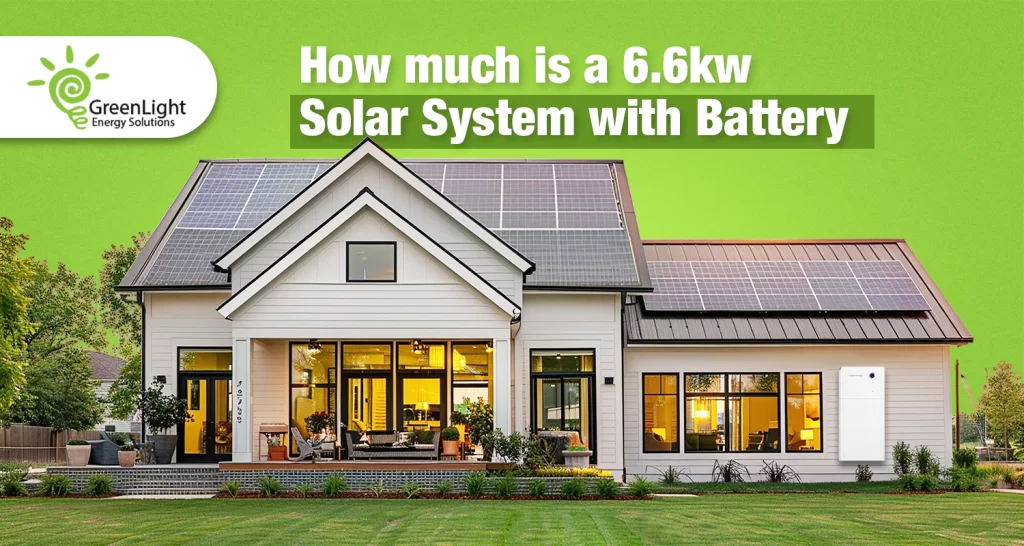
In 2026, a quality 6.6kW solar system costs $5,500 to $7,500 fully installed after the federal STC discount. Add a home battery and the combined system costs between $10,500 and $20,000 after all rebates, depending on the battery you choose. A popular pairing, 6.6kW of panels with a 10kWh battery, lands around $11,000 to $14,500 all in.
Those are very different numbers to what you would have paid even a year ago, because two rebates changed in 2026: the solar STC discount stepped down in January, and the federal battery rebate moved to a tiered structure in May. This guide breaks down the real costs, what the rebates now cover, and how long the system takes to pay for itself.
6.6kW solar system with battery: 2026 price guide
Typical fully installed prices in NSW, after the STC discount and the federal battery rebate:
| System | Battery (usable) | Price after all rebates |
|---|---|---|
| 6.6kW solar only | None | $5,500 to $7,500 |
| 6.6kW + Neovolt | 10.2kWh | $10,500 to $13,500 |
| 6.6kW + GoodWe ESA | 10kWh | $11,000 to $14,000 |
| 6.6kW + Fox ESS EP11 | 10.4kWh | $11,500 to $14,500 |
| 6.6kW + Tesla Powerwall 3 | 13.5kWh | $15,500 to $19,000 |
| 6.6kW + Sigenergy SigenStor | 15.6kWh | $16,500 to $20,000 |
Prices assume a single-visit installation on a standard tin roof in NSW as at July 2026, and vary with roof type, switchboard condition and location. Batteries with a built-in hybrid inverter, such as the Powerwall 3 and SigenStor, replace the standalone solar inverter, which is why combined installs cost less than buying the two parts separately.
Wondering which of these batteries deserves your money? Our comparison of which battery is best in 2026 ranks all of them on price, warranty and rebate value.
What is in the price
A fully installed quote covers four things: the panels themselves, usually 10 to 15 panels depending on wattage; the inverter, either a standalone string inverter or a hybrid unit built into the battery; mounting, wiring and labour; and the grid connection paperwork your installer lodges on your behalf. If a quote looks thousands cheaper than the ranges above, check which of these it has quietly left out, and check the panel brand against the Clean Energy Council approved list.
The two rebates, and what changed in 2026
Solar: the STC discount. The federal Small-scale Renewable Energy Scheme discounts your solar system upfront through Small-scale Technology Certificates. For a 6.6kW system in NSW in 2026, the discount is worth roughly $1,500 to $2,000, applied at the point of sale, no paperwork on your end. The catch is the step-down: the deeming period dropped from six years to five on 1 January 2026, which trimmed roughly $500 off the discount compared with last year, and it shrinks again every January until the scheme ends in 2030. Waiting costs real money.
Battery: the Cheaper Home Batteries Program. The federal battery rebate takes around 30 per cent off an eligible battery, but since 1 May 2026 it pays in tiers: the full rate, currently about $250 per usable kilowatt hour, on the first 14kWh, then 60 per cent of that rate up to 28kWh, and 15 per cent beyond. A 10kWh battery attracts about $2,500 and a 13.5kWh unit about $3,400. The full tier maths is in our federal battery rebate guide.
The NSW extra. NSW households can stack an incentive of up to $1,500 for connecting the battery to a virtual power plant. Details and eligibility are in our NSW rebate guide.
How much power does a 6.6kW system produce?
A north-facing 6.6kW system in NSW generates around 24 to 26kWh per day averaged across the year, or roughly 9,000 to 9,500kWh annually. That is more than the average Australian household uses in a day, which is exactly why the size is so popular: it covers daytime usage and leaves a healthy surplus.
Without a battery, that surplus exports to the grid for a feed-in tariff of just a few cents per kilowatt hour. With a battery, the surplus charges the battery instead, and you use it in the evening at the full retail rate you would otherwise pay, above 30 cents per kilowatt hour in most of NSW. That gap between the feed-in rate and the retail rate is the entire financial case for adding storage.
Savings and payback in 2026
| Setup | Typical annual saving | Typical payback |
|---|---|---|
| 6.6kW solar only | $1,500 to $2,500 | 3 to 6 years |
| 6.6kW solar + 10kWh battery | $2,300 to $3,300 | 6 to 9 years |
The battery extends the payback but lifts the total saving, and both halves of the system are warranted for at least 10 years, so the maths works with room to spare for most households. Time-of-use tariffs and VPP credits shorten the battery payback further. If you are weighing up whether storage is worth it for your usage pattern, our guide to the pros and cons of solar batteries gives the honest case both ways.
What size battery should you pair with 6.6kW?
A useful rule of thumb: enough capacity to cover your overnight usage plus a small buffer. For most households that means 10 to 13.5kWh alongside a 6.6kW array, which conveniently sits inside the battery rebate’s full-rate tier, where every kilowatt hour earns the maximum discount. Going much larger than 14kWh with only 6.6kW of panels usually does not stack up, because the panels cannot reliably fill the battery in winter and the extra capacity earns rebate at reduced rates. Run your own numbers with our guide to what size solar battery you need.
Is 6.6kW still the right size in 2026?
For a three to four bedroom home using 15 to 25kWh a day, yes, it remains the sweet spot of price and output. The 6.6kW figure exists because most single-phase homes are limited to a 5kW inverter, and the rules allow panels to be oversized by a third, so 6.6kW extracts the maximum from the most common setup.
That said, the calculation has shifted for some households. If you are planning an EV, ducted air conditioning or a larger battery, an 8kW to 10kW array often makes more sense, and panel prices per watt are the lowest they have ever been. The best time to size up is at installation, not later. Tell your installer what is coming in the next five years and let them size for that, not just for today’s bill.
Get an exact price for your home
The ranges on this page are real 2026 market prices, but your number depends on your roof, switchboard and usage. Greenlight Solar quotes 6.6kW and larger systems across NSW and Queensland with both rebates calculated exactly and applied upfront on the invoice.
Frequently asked questions
How much does a 6.6kW solar system with battery cost in Australia?
In 2026, a 6.6kW solar system with a 10kWh battery costs around $11,000 to $14,500 fully installed after the STC discount and the federal battery rebate. With a premium 13.5 to 15.6kWh battery, the combined cost is roughly $15,500 to $20,000 after rebates.
How much does a 6.6kW solar system cost without a battery?
A quality 6.6kW system costs $5,500 to $7,500 fully installed in 2026 after the federal STC discount. Budget systems advertise lower, but check the panel brand, inverter and what the installation actually includes.
How much is the solar rebate for a 6.6kW system in 2026?
The STC discount is worth roughly $1,500 to $2,000 for a 6.6kW system in NSW in 2026, applied upfront by the installer. The value steps down every January until the scheme ends in 2030, so it reduces each year you wait.
Is it worth adding a battery to a 6.6kW system in 2026?
For most households paying above 30 cents per kilowatt hour for evening power, yes. The federal battery rebate cuts around $2,500 off a 10kWh battery, and the combined system typically pays for itself in six to nine years against a 10-year warranty. Households with low evening usage or very high feed-in tariffs see weaker returns.
How many panels are in a 6.6kW system?
Between 10 and 15 panels depending on their wattage. With today’s common 440 to 475W panels, a 6.6kW system needs around 14 panels and roughly 24 square metres of roof space. Higher-wattage panels reduce the count further.
Can a 6.6kW system charge a battery in winter?
A 10kWh battery, yes, on most days in most of Australia. A 6.6kW array produces 15 to 18kWh on a typical NSW winter day, enough to run the home and charge a right-sized battery. This is one reason we recommend keeping battery capacity proportionate to the array rather than oversizing.