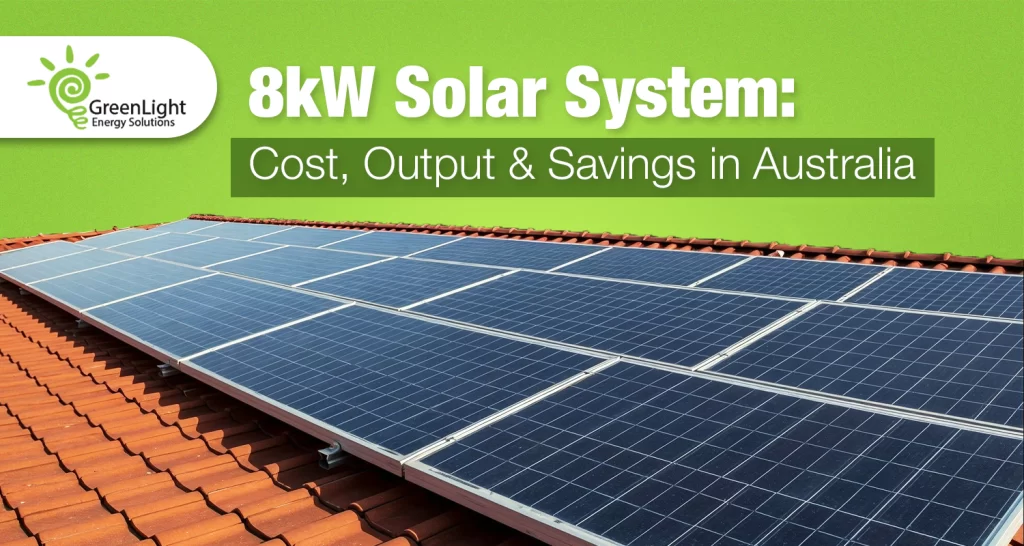
Electricity prices in Australia have climbed steadily over the past few years, and many households are now using more power than ever—whether it’s from air-conditioning, home offices, pool pumps or an expanding list of electric appliances. For families sitting in that middle-to-high usage bracket, an 8kW solar system has become a popular and practical size. It offers noticeably more output than a 6.6 kW setup, yet still fits comfortably on a standard residential roof.
If you’re considering upgrading your home’s energy setup, this guide breaks down the cost, output, savings, system size, panel count, and pros and cons of an 8kW solar system in Australia, based on insights from leading national benchmarks and real-world system performance.
What Is an 8kW Solar System?
An 8kW solar system is a grid-connected system designed with around 20–24 solar panels, depending on panel wattage. Most modern panels sit between 350 W and 440 W, which helps achieve the full 8 kW rating without consuming excessive roof space. On average, you’ll need around 40–60 m² of clear, shade-free roof area.
This system size is ideal for families who consistently use more electricity throughout the day, especially those running multiple split systems or a ducted air-conditioning unit, an EV charger, or several power-hungry appliances.
How Much Does an 8kW Solar System Cost in Australia?
In Australia, an 8kW solar system typically costs between $7,000 and $11,000 after federal STC rebates.
This price varies based on:
- Panel and inverter brand
- Installation design
- Roof pitch and access
- Whether the home requires switchboard or wiring upgrades
- Location and STC zone
- Add-ons (like batteries or optimisers)
Budget systems occasionally appear below $6,000, but they often use lower-grade hardware or short warranties. On the higher end, premium systems with top-tier panels and a renowned inverter may reach or exceed $12,000.
When installed by an accredited provider like Greenlight Solar, that price includes high-quality hardware, professional installation and long-term warranty support.
How Much Power Does an 8kW Solar System Produce?
Across Australia, a well-installed 8 kW system produces roughly:
28–34 kWh per day on average
Daily output varies based on your city:
- Sydney: ~29 kWh/day
- Perth: ~34 kWh/day
- Brisbane: ~32 kWh/day
- Melbourne: ~26–28 kWh/day
- Adelaide: ~30–32 kWh/day
- Darwin: 33–35+ kWh/day
Seasonal differences also come into play. Summer typically pushes you well into the high 30s, while winter mornings and cloudy weeks pull output lower.
For many households, this is enough to cover most daytime use and still generate surplus energy for either export or battery storage.
How Much Can You Save With an 8kW Solar System?
A system this size can deliver $1,500 to $3,000+ in annual savings, depending on your usage patterns.
Your savings depend on:
- How much of the solar you use yourself
- Your electricity tariff
- Feed-in tariff rates
- Whether you run power-heavy appliances during daylight hours
- Whether you pair the system with a battery
Households that shift their usage into the middle of the day (dishwasher, washing machine, heating/cooling, pool pumps) see the strongest results. With the right habits, the payback period for an 8kW system is often 3–6 years.
How Many Panels Do You Need for an 8kW Solar
System?
The total panel count depends on panel wattage:
- 20 x 400 W panels = 8 kW
- 22 x 370 W panels = ~8.1 kW
- 24 x 340 W panels = ~8.1 kW
This flexibility makes it easier to design a system that fits unique roof shapes while maintaining expected performance.
Who Is an 8kW Solar System Best Suited For?
An 8kW system is a strong match for:
- Homes using 28–40 kWh/day
- Growing families with rising energy needs
- Households running pool pumps or large AC systems
- Homes with EV charging or plans to buy an EV soon
- People working or schooling from home
- Properties moving away from gas toward all-electric appliances
- Homes planning to add a solar battery
If you consistently use more electricity during daylight hours—or want to reduce future bills as electrification increases—an 8kW system gives you more breathing room than a smaller 6.6 kW system.
Pros and Cons of an 8kW Solar System
Advantages
Reliable Output for Busy Families
An 8kW system produces enough energy to comfortably support homes running air-conditioning, pool pumps, computers, home offices and appliances throughout the day. It keeps daytime grid use low and helps stabilise your power bills.
Suitable for Electric Homes and EV Charging
With more households adopting EVs and switching to electric cooking or heat pumps, an 8kW setup offers long-term headroom without needing to upgrade the system down the track.
Improved Long-Term Savings
Because it generates higher daily output, an 8 kW system can deliver stronger annual savings—often between $1,500 and $3,000+. Households who shift usage into daylight see particularly fast payback.
Ideal for Battery Pairing
A system this size produces enough excess solar to efficiently charge a 10–13.5 kWh battery, making it easier to cover evening and overnight electricity use with stored solar power.
Future-Proof Without Becoming Oversized
It fits nicely between typical residential and small commercial systems. Most homes find 8 kW to be “just right” when planning ahead for increased electricity use.
Disadvantages
Higher Upfront Investment
With premium systems regularly landing above $8,500, some households may feel stretched by the upfront price—though long-term savings often offset this quickly.
Needs More Roof Space
40–60 m² of clear area is required. Homes with shading issues, complex rooflines or limited roof space might not be ideal candidates.
Not Always Suitable for Low-Usage Homes
If your electricity usage is modest, you may consistently export excess solar at low feed-in tariffs, reducing your financial return.
Possible Switchboard or Wiring Upgrades
Older homes may require electrical upgrades, which add to installation costs and project timeframes.
Larger System = More Planning
More panels require careful design to avoid shading issues, ensure clean cable runs and optimise orientation.
8kW Solar System with Battery: Should You Add One?
Pairing an 8kW system with a battery is ideal for households that:
- Use a lot of energy in the evening
- Charge an EV overnight
- Have time-of-use tariffs with expensive peak periods
- Want blackout protection
- Aim for high energy independence
A battery helps you store your surplus energy so you’re not exporting it for a low feed-in tariff. Instead, you use your own stored power when the sun goes down.
Final Thoughts:
For many Australian households, the answer is yes. An 8kW solar system strikes a balance between affordability, strong output and future flexibility. It’s ideal for medium-to-large homes, families with rising electricity needs, and properties shifting toward electric appliances and EVs.
Installed by experts like Greenlight Solar, an 8kW system is reliable, scalable, and capable of delivering impressive long-term bill reductions.
FAQ:
1. How much does an 8kW solar system cost in Australia?
An 8kW solar system in Australia typically costs between $7,000 and $11,000 after federal rebates, depending on hardware quality, installation difficulty and inverter choice. Premium systems with top-tier panels may exceed $12,000, while budget setups may sit slightly lower. Roof layout, shading, and switchboard upgrades can influence the final price, but most homes fall within this general range for a complete installation.
2. What is the daily output of an 8kW solar system?
An 8kW solar system usually produces 28–34 kWh per day across Australia, with sunnier regions such as Perth and Brisbane reaching the higher end of the scale. Output varies with orientation, shading, roof pitch and seasonal weather changes. Summer days often deliver excellent generation, while shorter winter days reduce total output slightly. For many households, this level of production is enough to cover most daytime electricity needs.
3. How many solar panels are required for an 8kW system?
Most 8kW solar systems require 20–24 panels, depending on the wattage of each panel. Modern solar panels typically range from 350 W to 440 W, so the total number depends on the exact panel chosen. Homes need around 40–60 m² of usable roof space for this setup. The final design also considers shading, direction and whether panels must be spread across multiple roof sections.
4. Is an 8kW solar system suitable for my home?
An 8kW system suits homes that use 28–40 kWh per day or those expecting higher future consumption such as EV charging or electrified heating. It is ideal for families running air-conditioning, pool pumps, home offices and multiple appliances. If your roof space allows and you use most of your power during the day, an 8kW system can deliver strong savings and fast payback for Australian households.
5. How much can an 8kW solar system save per year?
An 8kW solar system can save households $1,500 to $3,000+ annually, depending on electricity tariffs, daytime usage and feed-in rates. Homes that actively shift their major appliances into daylight hours achieve the highest savings. With good self-consumption habits, many households recover their investment within 3–6 years, after which the system continues delivering long-term bill reductions with minimal ongoing costs.
6. Is an 8kW solar system worth adding a battery to?
Yes, an 8kW solar system works very well with a home battery. A typical 10–13.5 kWh battery can store excess daytime generation and supply evening and overnight loads. This setup is ideal for homes with high night-time use, EV charging needs or time-of-use tariffs. Batteries also improve energy independence and reduce reliance on the grid, creating smoother and more predictable electricity bills.