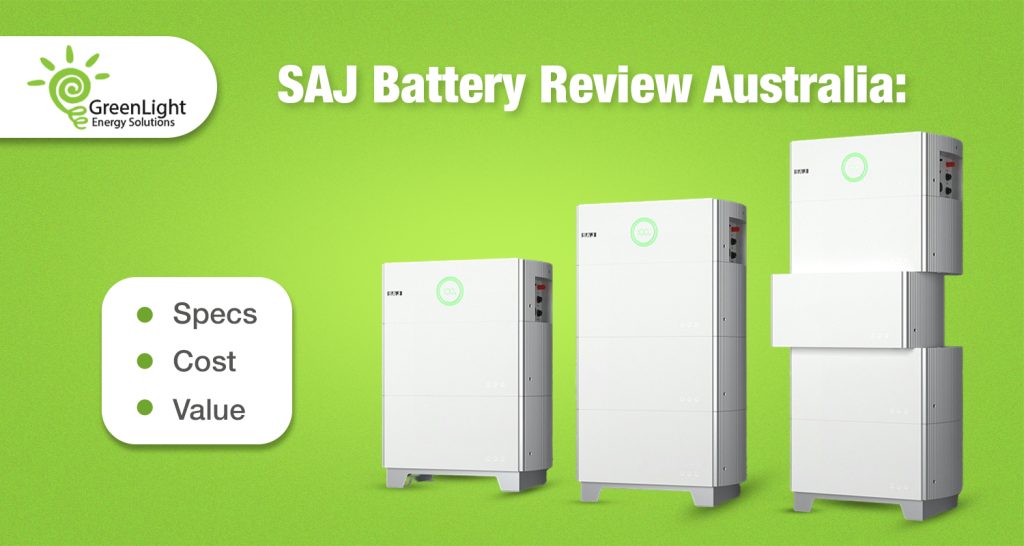
As solar energy becomes a cornerstone of Australia’s push for sustainable living, homeowners are increasingly turning to solar battery storage to maximise their energy savings. Among the many brands available, SAJ has emerged as a compelling option for those seeking affordable, reliable, and scalable battery solutions. At Greenlight Solar, we’re committed to helping Australians make informed decisions about their solar investments. In this comprehensive SAJ battery review, we explore the specifications, costs, pros, cons, and overall value of SAJ battery systems, tailored for Australian households looking to reduce their reliance on the grid.
Who Is SAJ, and Why Consider Their Batteries?
SAJ, officially Guangzhou Sanjing Electric Co., Ltd., is a Chinese manufacturer founded in 2005, specialising in solar inverters, energy storage systems, and energy management solutions. With a growing presence in Australia since establishing a local office in Melbourne in 2019, SAJ has gained traction for offering cost-effective solar products without compromising on quality. Their batteries, particularly the B2 and HS2 series, are designed to meet the needs of Australian homes, offering flexibility, safety, and compatibility with various solar setups. We proudly offer SAJ battery systems, ensuring professional installation and local support for customers across Sydney, Melbourne, Brisbane, Adelaide, and Canberra.
What Are the Key Features of SAJ Batteries?
SAJ batteries are known for their modular design, affordability, and robust performance. Here’s a breakdown of their standout features:
- Lithium Iron Phosphate (LiFePO4) Chemistry: SAJ uses LiFePO4 batteries, which are renowned for their safety, thermal stability, and long cycle life compared to traditional lithium-ion batteries. This makes them ideal for Australian conditions, where temperatures can fluctuate significantly.
- Modular and Scalable Design: The B2 series allows homeowners to start with a smaller capacity (e.g., 5.12 kWh) and expand up to 25.6 kWh by stacking additional modules, catering to growing energy needs.
- IP65 Rating: With a weatherproof design, SAJ batteries are suitable for outdoor installation, provided they’re protected from direct sunlight and rain.
- Blackout Protection: SAJ batteries support backup power, switching to stored energy in under 10 milliseconds during a grid outage, ensuring essential appliances stay powered.
- Smart Energy Management: The integrated energy management system, accessible via a mobile app, allows real-time monitoring of energy production, consumption, and battery performance.
These features position SAJ as a practical choice for homeowners seeking a balance between cost and functionality, making it a strong contender in the Australian solar battery market.
Pros & Cons of SAJ Batteries
Pros:
- Competitive pricing with long warranties
- Integrated inverter + battery system
- Local service through trusted installers like Greenlight Solar
- Compatible with most rooftop solar arrays
- IP65 outdoor rating
Cons:
- Limited app features compared to premium brands
- Less known brand to mainstream consumers
- Software interface can feel dated
How Does SAJ Compare to Other Popular Batteries?
When comparing SAJ to premium brands like Tesla or Sungrow, SAJ stands out for its affordability. Tesla’s Powerwall 3 offers a sleek all in one design with a built in inverter, but it sits at a noticeably higher price point. Sungrow’s SBR batteries offer 100% depth of discharge but come in around $660 per kWh, closer to the premium end of the market.
The two brands homeowners most often cross-shop against SAJ are Fox ESS and Sigenergy, since all three use LiFePO4 chemistry and sit in a similar modular category.
SAJ vs Fox ESS
Fox ESS has become one of the most competitive value options in the Australian market, with typical Sydney installations sitting between 7.8 kWh and 13 kWh and installed systems routinely landing under $7,500 after the federal rebate. SAJ trades blows with Fox ESS on price, though Fox ESS currently has the wider installer network and a slightly more established local track record. If price per kWh is your only priority, get quotes on both before deciding, since the gap often comes down to installer margin rather than hardware cost. Read our full Fox ESS battery review for a closer look.
SAJ vs Sigenergy
Sigenergy’s SigenStor sits at the premium end of the modular battery category, with a 97% depth of discharge, a built in hybrid inverter option, optional bi-directional EV charging, and the mySigen app with its AI powered SigenAgent feature. That extra capability comes at a meaningfully higher installed cost than SAJ. SigenStor makes sense if you want the most capable single unit on the wall and expect your usage to grow. SAJ makes more sense if your priority is the lowest realistic entry cost into whole-home battery storage. Our Sigenergy battery review breaks down the SigenStor in detail.
For a side by side look at every battery brand we install, see our best solar battery in Australia guide.
Overall, SAJ remains one of the strongest value picks in the Australian market for households who want genuine LiFePO4 safety and a 10 year warranty without paying premium brand pricing.
SAJ Battery Price in Australia (2026 Update)
SAJ Battery Price in Australia (2026 Rebate Update)
The cost of a SAJ battery system depends on capacity, series (B2 or HS2), installation complexity and location. Industry pricing benchmarks put SAJ’s installed cost at around $950 per usable kWh before rebates, among the lowest of any CEC-approved LiFePO4 brand sold in Australia.
The federal battery rebate changed on 1 May 2026. The old flat-rate discount has been replaced by a tiered structure under the Cheaper Home Batteries Program:
- First 14 kWh of usable capacity: full rebate rate, currently around $250 per kWh
- 14 kWh to 28 kWh: 60% of the full rate, currently around $150 per kWh
- 28 kWh to 50 kWh: 15% of the full rate, currently around $40 per kWh
- Above 50 kWh usable: no further rebate applies
Because a SAJ B2 system built from two modules (around 9 kWh usable) sits entirely inside the full-rate tier, it stays one of the better-positioned batteries under the new rules. You lose no rebate value to the reduced tiers the way you would with a larger system. Here’s what that looks like across common B2 configurations:
| SAJ B2 configuration | Usable capacity | Approx. federal rebate |
|---|---|---|
| 2 modules | ~9 kWh | ~$2,250 |
| 3 modules | ~13.5 kWh | ~$3,375 |
| 4 modules | ~18 kWh | ~$4,100 |
| 5 modules (max stack) | ~22.5 kWh | ~$4,775 |
The rebate is applied directly on your installer’s quote, so there’s no separate application or paperwork. The STC rate is scheduled to step down again every six months, with the next reduction due 1 January 2027, so installing sooner locks in the current rate.
State-based top-ups still apply on top of the federal rebate in some regions, such as NSW’s Home Energy Saver loan and WA’s Residential Battery Scheme, so your final out-of-pocket cost depends on your postcode as well as system size. Because actual pricing depends on your existing inverter, switchboard and site access, the most accurate number is a personalised quote through our SAJ Solar Battery page.
What Are the Specifications of SAJ’s B2 and HS2 Series?
SAJ offers two primary battery lines in Australia: the B2 series (standalone high-voltage batteries) and the HS2 series (all-in-one systems with integrated hybrid inverters). Below are the key specifications:
- B2 Series:
- Capacity: 5.12 kWh per module, scalable up to 25.6 kWh.
- Usable Capacity: 4.5 kWh per module (90% depth of discharge).
- Nominal Voltage: 102.4V to 512V, depending on configuration.
- Warranty: 10 years or 3,060 kWh throughput per usable kWh.
- Compatibility: Works with SAJ hybrid inverters or select third-party inverters like Selectronic.
- Cooling: Passive cooling via natural convection for silent operation.
- HS2 Series:
- Capacity: Up to 20.48 kWh (single-phase) or 25.6 kWh (three-phase).
- Usable Capacity: 93.75% depth of discharge.
- Inverter: Built-in hybrid inverter, eliminating the need for a separate inverter.
- Safety Features: Includes Arc Fault Circuit Interruption (AFCI) and Rapid Shutdown (RSD).
- Installation: Suitable for new solar systems or retrofitting existing setups.
Both series are CEC-approved, ensuring compliance with Australia’s strict safety and performance standards. Greenlight Solar’s expert team can help you choose between the B2 and HS2 series based on your home’s energy needs and existing solar setup.
Are SAJ Batteries Worth the Investment?
SAJ batteries offer excellent value for homeowners seeking an affordable entry into solar storage. Their modular design allows for future expansion, and the 10-year warranty provides peace of mind. While their throughput guarantee is lower than some premium brands, the upfront savings make SAJ a smart choice for budget-conscious households. By storing excess solar energy, SAJ batteries can reduce electricity bills by up to 70%, depending on usage patterns and local feed-in tariffs. Greenlight Solar’s installation services ensure seamless integration, maximising your return on investment.
Final Thoughts
SAJ batteries offer a compelling mix of affordability, flexibility, and performance for Australian homeowners. Their modular design, robust safety features, and local support make them a strong contender in the solar battery market. While they may lack some advanced features of premium brands, their cost-effectiveness and reliability make them an excellent choice for budget-conscious households. Ready to explore SAJ batteries for your home? Contact Greenlight Solar today for a free quote and take the next step toward energy independence.
FAQ
Are SAJ Batteries Compatible with Existing Solar Systems?
Yes, SAJ batteries are compatible with most existing solar systems, particularly when paired with SAJ hybrid inverters. The HS2 series is ideal for retrofitting, as it includes a built-in inverter, while the B2 series works with compatible hybrid inverters like SAJ or Selectronic. This flexibility ensures homeowners can add storage without replacing their entire system, provided the inverter supports DC-coupled batteries. Always consult a professional installer like Greenlight Solar to verify compatibility and optimise performance.
What Is the Lifespan of SAJ Batteries?
SAJ batteries typically last 10–15 years, depending on usage and maintenance. Their LiFePO4 chemistry supports over 6,000 cycles, with a 10-year warranty guaranteeing at least 3,060 kWh throughput per usable kWh. Proper care, such as avoiding extreme temperatures and deep discharges, can extend their lifespan. Greenlight Solar provides guidance on maintaining your battery to ensure long-term performance and reliability.
Do SAJ Batteries Support Blackout Protection?
Yes, SAJ batteries provide blackout protection, switching to backup power in under 10 milliseconds during a grid outage. This feature ensures essential appliances like fridges and lights remain operational, enhancing energy independence. The HS2 series, with its integrated inverter, is particularly effective for seamless backup. Greenlight Solar can configure your system to prioritise critical circuits, maximising efficiency during outages.
How Does the SAJ Battery Warranty Work?
SAJ offers a 10-year warranty on its B2 and HS2 series, covering both product and performance. The warranty guarantees a minimum throughput of 3,060 kWh per usable kWh or 70% capacity retention, whichever comes first. For a 13.5 kWh battery, this equates to 41,310 kWh over its lifespan. Greenlight Solar’s local support ensures hassle-free warranty claims through SAJ’s Melbourne office.
How Does SAJ Compare to Fox ESS and Sigenergy?
SAJ and Fox ESS are closely matched on price, and both use LiFePO4 chemistry, so the choice often comes down to installer support and stock availability rather than the hardware itself. Sigenergy’s SigenStor sits at the premium end with a higher depth of discharge and a more advanced app, but at a higher installed cost. For most budget-focused households, SAJ and Fox ESS are the two to shortlist. For households wanting the most capable single unit with room to grow, Sigenergy is worth the extra spend.