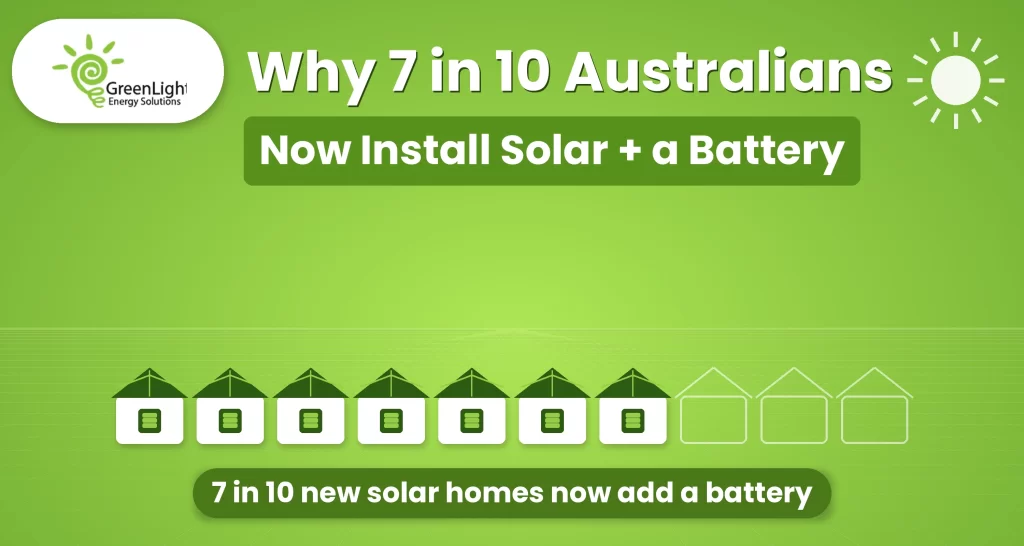
A few years ago, most people put panels on the roof and left it there. That has changed. Across new rooftop installations in 2026, batteries have gone from a nice extra to the default choice, and leading installers now pair a battery with close to seven in ten new solar systems. The short reason: a federal rebate knocked roughly a third off battery prices, feed-in tariffs kept shrinking, and homeowners worked out that storing their own power beats selling it back to the grid for a few cents.
Here is what is driving the shift, and whether adding storage stacks up for your home.
The rebate changed the maths overnight
The biggest catalyst is the federal Cheaper Home Batteries Program, which started on 1 July 2025. It takes around 30 per cent off the upfront cost of an eligible home battery between 5 kWh and 100 kWh, applied straight to your quote through Small-scale Technology Certificates. There is no waiting for a tax refund and no income test.
In 2026 that works out to roughly $250 to $300 off per usable kilowatt-hour after installer fees. On a typical 10 kWh battery, that is about $3,000 straight off the price. Pair it with a new solar system and the panels still attract their own STC discount, so a full solar and battery package lands far cheaper than buying the two separately a year apart.
One thing to know if you are weighing it up: the rebate is legislated to shrink. From 1 May 2026 the scheme moved to a tiered structure, with full support for capacity up to 14 kWh and a reduced rate above that. The STC factor also steps down twice a year now, and keeps falling through to 2030. Waiting a year does not make batteries free, it makes the government’s share of the bill smaller.
Feed-in tariffs made exporting power pointless
The second driver is what happened to feed-in tariffs. A decade ago you could earn 40 to 60 cents for every kilowatt-hour you exported. Today most retailers pay somewhere between 1 and 12 cents, while you still pay 30 to 40 cents to buy power back after dark.
That gap is the whole argument for storage. Without a battery, a solar-only home gives away its cheap daytime power and buys expensive grid power every evening. A battery flips that around: it soaks up the surplus your rooftop solar system makes at midday and hands it back when you actually need it, in the evening peak. Every stored kilowatt-hour you use yourself is worth three to six times more than the same unit exported.
Blackout cover people did not have before
Ask any household that sat through a summer storm outage and they will tell you why storage sold itself. A solar-only system shuts down in a blackout for safety reasons, so the panels are useless exactly when you need them. A battery with backup capability keeps the fridge, the lights and the internet running through an outage.
As grid reliability wobbles in parts of NSW and Queensland, that peace of mind has become a genuine reason to buy rather than a bonus feature. Models like the Tesla Powerwall 3 and the all-in-one Sigenergy battery and inverter are built around whole-home backup, which is part of why they sell so well. If you are still deciding between brands, our Sigenergy vs Tesla vs Sungrow comparison breaks down the differences.
The numbers behind the trend
The scale of the change is hard to overstate. Around 221,000 home batteries went in during 2025, roughly triple the previous year. The Clean Energy Regulator expects up to 520,000 installations across 2026, delivering about 12 GWh of new storage. New South Wales is leading the country on both volume and attachment rate, helped along by the NSW government incentive scheme.
Battery ownership sat near 4.6 per cent of Australian homes at the start of 2026, against about 40 per cent for solar panels. That gap is exactly why installers are so busy: millions of solar homes are now candidates for a retrofit, and almost every new solar buyer is adding storage from day one.
Is it worth it for your home?
Storage makes the most sense if you use a decent chunk of power in the evening, you are on a low feed-in tariff, or you want backup during outages. Payback periods have come down to roughly eight to nine years with the rebate, and shorter again if you join a Virtual Power Plant and get paid for letting the grid draw on your battery at peak times. It is worth reading through the pros and cons of solar batteries before you commit.
If your household is empty all day and tiny in the evening, solar alone may still be the smarter spend. The honest answer depends on your bill and your habits. You can compare current solar and battery packages or talk it through with a local installer.
Frequently asked questions
Is it worth getting a battery with solar in 2026?
For most households, yes. With the federal rebate taking around 30 per cent off the price and feed-in tariffs down to a few cents, storing your own power and using it at night now saves far more than exporting it. It is less compelling if you use very little electricity in the evening or already have a high feed-in rate locked in.
Do I get a bigger discount if I install solar and a battery at the same time?
You get two separate incentives that stack. The solar panels attract STCs under the small-scale scheme, and the battery attracts its own rebate through the Cheaper Home Batteries Program. Installing them together also saves on labour and a second call-out, so a combined package is usually cheaper than adding a battery later.
How much does a solar and battery system cost in Australia right now?
After rebates, a typical home solar system paired with a 10 kWh battery generally lands in the mid five figures, with the battery portion reduced by roughly $3,000 through the federal discount. See our full breakdown of a 6.6kW solar system with battery cost for a worked example. The exact price depends on system size, battery brand and your roof, so a written quote is the only way to get a real figure.
Can a solar battery keep my house running during a blackout?
Only if it is set up for backup. Batteries with a backup function, such as the Tesla Powerwall 3, can isolate your home from the grid and keep essential circuits powered through an outage. Some entry-level batteries do not offer this, so it is worth confirming before you buy.
How long does it take for a solar and battery system to pay for itself?
With the current rebate, payback typically falls around eight to nine years, down from the ten to twelve years common before the scheme expanded. Joining a Virtual Power Plant can shorten that further by paying you for stored energy the grid uses at peak demand.
What size battery does an average Australian home need?
Most homes land on something between 10 kWh and 13.5 kWh, which covers a typical evening and overnight load. The federal rebate gives its full value up to 14 kWh, so sizing around that mark tends to give the best return per dollar. Our guide on what size solar battery you need walks through how to match capacity to your usage.
Is the federal battery rebate still available?
Yes. The Cheaper Home Batteries Program is running through to 2030, but the discount steps down over time and changed to a tiered structure on 1 May 2026. The rebate is smaller each year, so the value is highest for systems installed sooner.